🔥 Automatic expense categorisation is here! No more sorting invoices by hand.Show me →

 English
 Čeština
 Slovenčina
Tenderstem broccoli, up 45% in two weeks: how The Atrium catches it now
45 % spike
in a single ingredient price, caught the week it happened
3–4 hrs → 10 mins
month-end paperwork down to a weekly five-minute job
admin time clawed back by the owner
−12 hours / month
From two-rosette kitchens to chef patron in Brigg
Trevor Guerin has been a chef since around 2010. He bought The March Hare in Market Rasen in 2017, sold it to his accountant (of all people), and spent the next few years freelancing between kitchens that never felt his own.
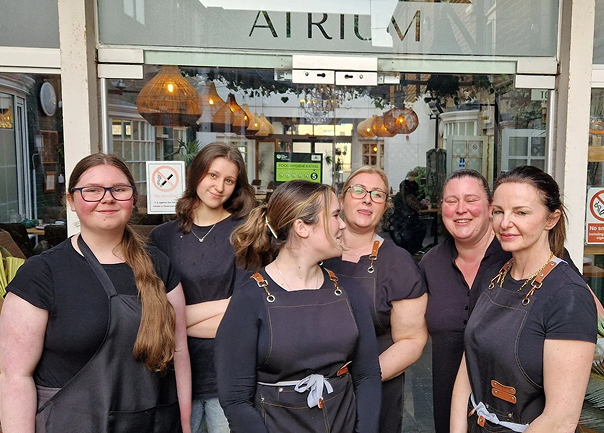
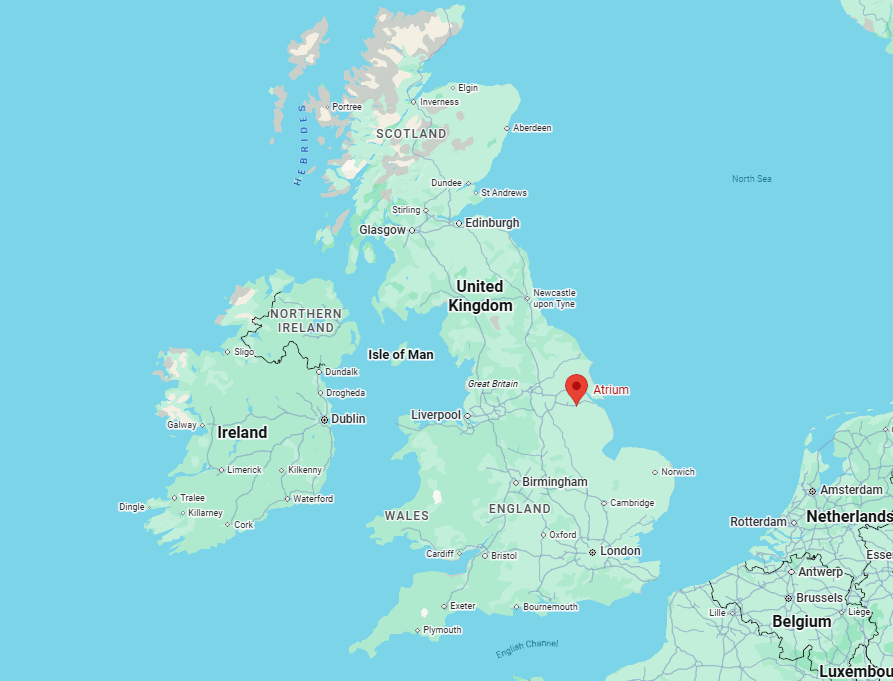
The Atrium, a 70-cover restaurant in Brigg, was meant to be one more of those gigs. Trevor came in as chef between owner Paul's two sites and quietly made the place his own. Last January, he asked Paul about going on the books. Paul came back with a different idea: why don't you just buy it?
The Atrium, a 70-cover restaurant in Brigg, was meant to be one more of those gigs. Trevor came in as chef between owner Paul's two sites and quietly made the place his own. Last January, he asked Paul about going on the books. Paul came back with a different idea: why don't you just buy it?
"I fumbled my way through for six months"
Owning the place meant taking on the books. And Trevor had no idea where the money was actually going.
"For the first six months, I fumbled my way through the business, and it was like, 'I can't keep doing this.'"
Invoices came in on paper and went into a box for the accountant. Trevor would spend three to four hours every month sitting down to put them into date and supplier order, mark off the ones he'd already paid, and hand the lot over. Then the back-and-forth would start: which invoice had VAT on it, which one was missing, which payment matched which supplier. The accountancy bill kept creeping up.
"For the first six months, I fumbled my way through the business, and it was like, 'I can't keep doing this.'"
Invoices came in on paper and went into a box for the accountant. Trevor would spend three to four hours every month sitting down to put them into date and supplier order, mark off the ones he'd already paid, and hand the lot over. Then the back-and-forth would start: which invoice had VAT on it, which one was missing, which payment matched which supplier. The accountancy bill kept creeping up.

"I said, 'Well, that's expensive.' And she was like, 'No, but we're having to do all this work for you — you're just giving us literally a bag full of invoices, a bag full of paper.' I was like, 'Oh, right. Yeah, yeah. That's quite a lot of work.'"
Trevor's own back-of-envelope explanation was straightforward:
"I'm not an accountant. I'm not getting charged at 50, 60 quid an hour. So that's probably where it's all added up."
Then a Dishboard ad came up on Facebook.
"It's paid for itself"
After the demo, Trevor's hesitation was about cost — Dishboard was money he hadn't budgeted for. But the way he framed the question back to himself was sharper:
"It was a cost that I hadn't put any money towards. So I was like, 'Hmm, can we afford it?' But then it was: can we afford not to do it? And it's paid for itself."

What changed in practice
Invoices now get scanned in, photographed or emailed to a dedicated Dishboard address — and Trevor has set many of his suppliers up to send theirs there directly. Once a week, Trevor and his manager sit down and approve the lot.
"We've probably cut it down from me spending three, four hours at the back end of the month to probably ten, fifteen minutes a week, just going boom, boom, boom… Even if you're approving 20, 30 invoices, five, ten minutes tops, and then you know they're in there."
The accountant now has her own Dishboard login. Trevor offered to come in and show her how to use it:
"We've probably cut it down from me spending three, four hours at the back end of the month to probably ten, fifteen minutes a week, just going boom, boom, boom… Even if you're approving 20, 30 invoices, five, ten minutes tops, and then you know they're in there."
The accountant now has her own Dishboard login. Trevor offered to come in and show her how to use it:
"The accountant rang ten minutes later and went, 'This is great. So easy to use.'"
When she spots something missing now, she flags it directly in the system rather than chasing Trevor over email for days. And by Trevor's count, the time savings flow back to her too — which means back to him.
"It should save her a good few hours as well, thus saving me more money on her time."
The whole pipeline closes the loop on VAT and reconciliation automatically — and that's the moment Trevor's six months of guesswork end:
"It automatically ties it to that transaction, so no accountants need to go, 'Oh, well, what's that?' It'll even work out how much money you can get back on your VAT. What's not to like? It gives you all the visibility as a business owner what you want, not just guesswork. And that's literally all we were doing — guessing for the first six months."
"It automatically ties it to that transaction, so no accountants need to go, 'Oh, well, what's that?' It'll even work out how much money you can get back on your VAT. What's not to like? It gives you all the visibility as a business owner what you want, not just guesswork. And that's literally all we were doing — guessing for the first six months."
Cost Radar: catching every supplier price move
The other half of Dishboard for Trevor is Cost Radar. The Atrium signed up primarily for the admin side; Cost Radar was the added benefit.
The first big catch was tenderstem broccoli — up roughly 45% in a fortnight. Trevor wouldn't have spotted it scanning paper invoices. With Cost Radar, the line jumped out, and he was straight on the phone to the account manager, telling them to put the price on a fixed cost.
The first big catch was tenderstem broccoli — up roughly 45% in a fortnight. Trevor wouldn't have spotted it scanning paper invoices. With Cost Radar, the line jumped out, and he was straight on the phone to the account manager, telling them to put the price on a fixed cost.
"Suppliers are never going to tell you when there's a cost increase, are they? They never even tell you if anything goes down. So they're definitely not going to tell you when things go up."
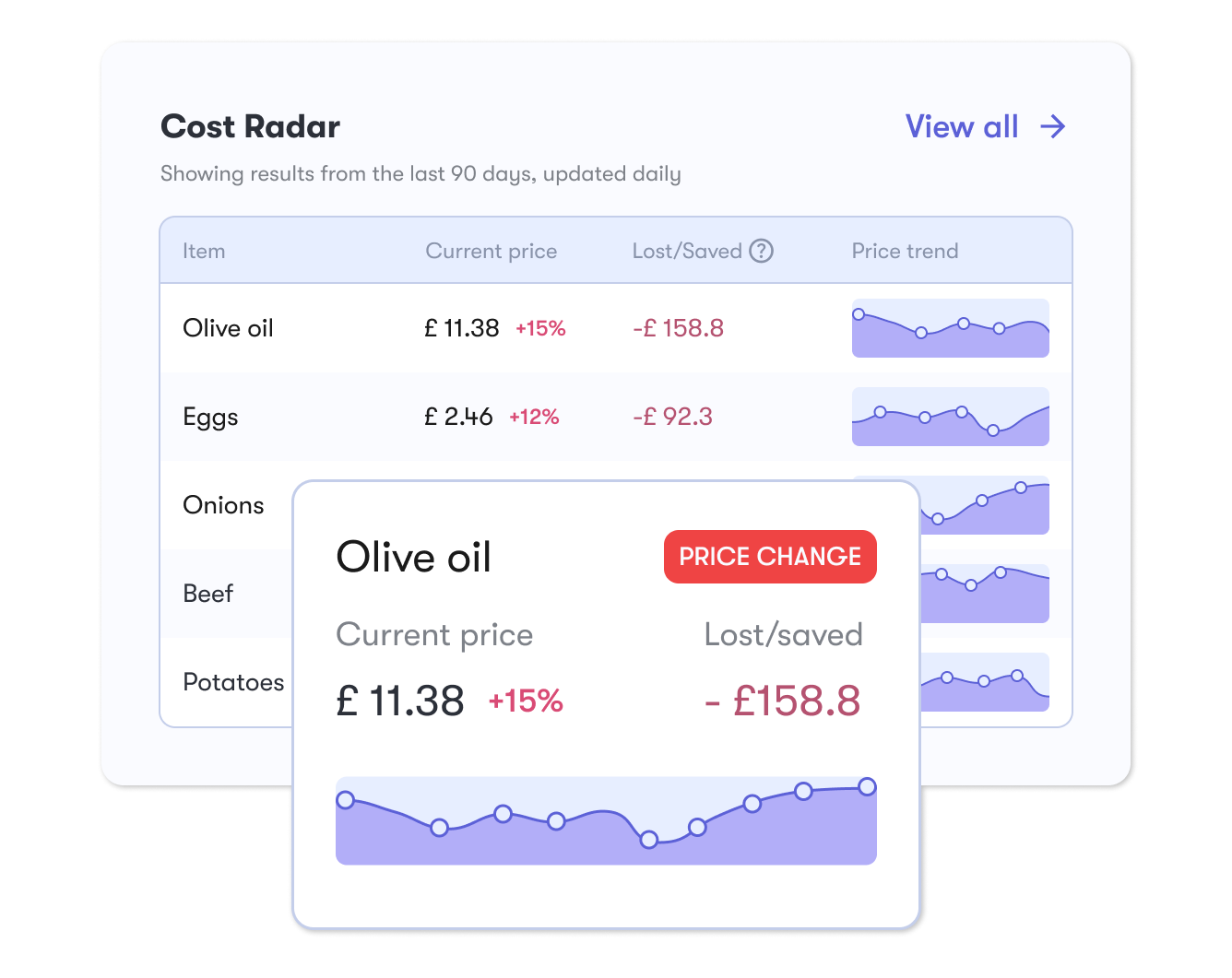
The other use: comparing two suppliers like-for-like. The Atrium buys ambient, chilled and frozen from both Turner Price and Brakes. The same products go on offer at both — typically Brakes drops the price first, with Turner Price following two to three weeks behind. Cost Radar lets Trevor chase the special offers between them, week by week, without having to place duplicate orders just to compare.
"I can guarantee there's no business owner that every single week looks through their invoice and says, 'Tenderstem broccoli's gone up from £2.25 for 500 grams to £3.25…' Nobody's got the time for that, because we're running round with all our other hats on… But I am doing that now, I'm employing you guys to tell me that broccoli's gone up or that tea cakes have gone up. In a way, is it expensive for that? No. It would take me more in my own time than it costs me a month for Dishboard."
"I can guarantee there's no business owner that every single week looks through their invoice and says, 'Tenderstem broccoli's gone up from £2.25 for 500 grams to £3.25…' Nobody's got the time for that, because we're running round with all our other hats on… But I am doing that now, I'm employing you guys to tell me that broccoli's gone up or that tea cakes have gone up. In a way, is it expensive for that? No. It would take me more in my own time than it costs me a month for Dishboard."
The numbers Trevor finally got to see
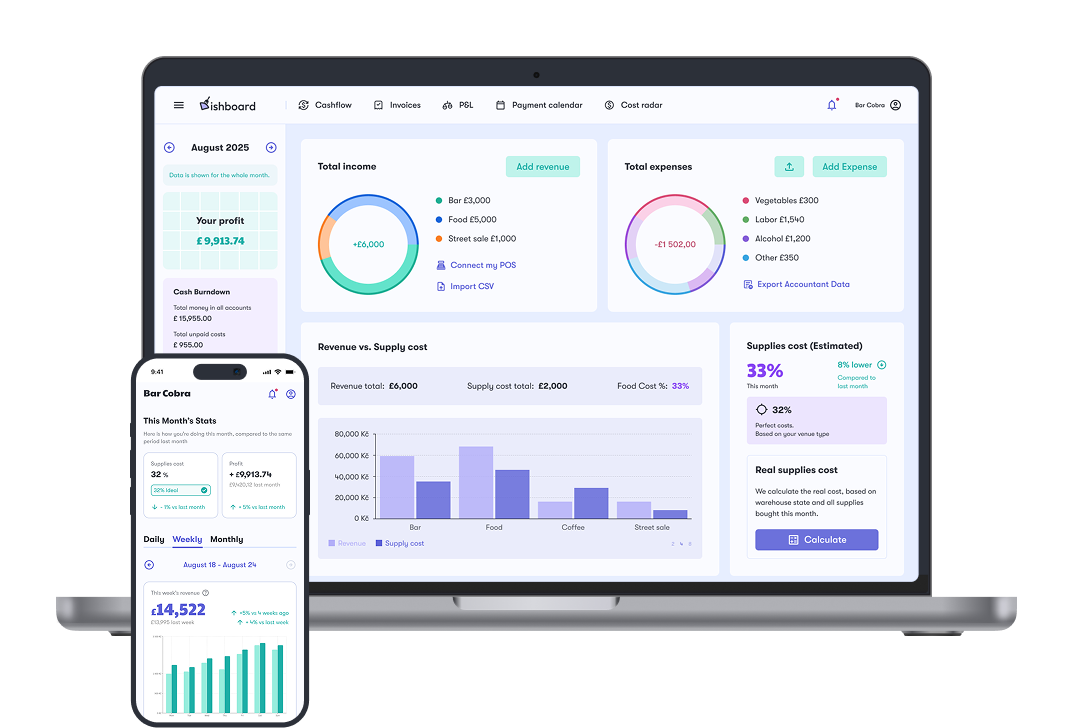
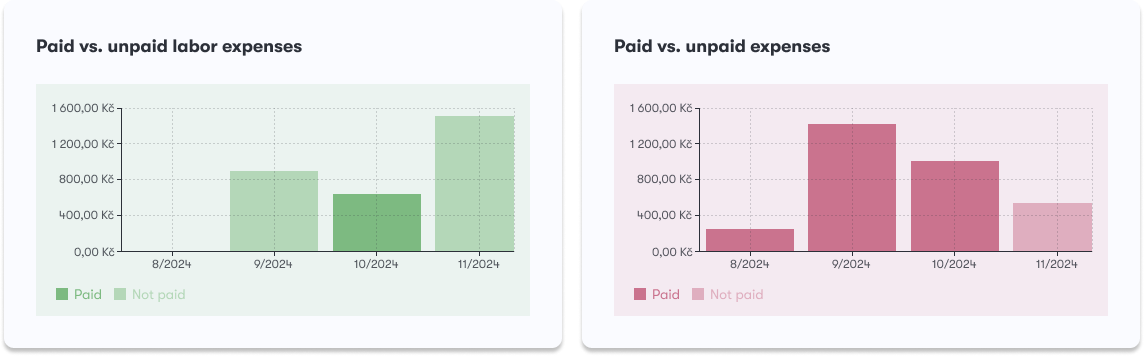
The first month of Dishboard data settled something Trevor had been wondering about for months. He'd been telling himself labour costs were probably running at 40–45%. When the figures came through Dishboard, labour was actually at 32%. Still room to improve — Trevor is now nudging it towards 30% with the help of a separate scheduling tool — but a long way from the picture he'd been carrying in his head. After six months of guessing, he finally had numbers to push against.
"From having no visibility of the figures to having pretty much full visibility, on a month-on-month basis — week by week if you want to drill down to it… We're a bit more proactive now than we were."
"We know we're actually being listened to"
A small but telling detail: when Trevor first started, one feature he wanted didn't exist — being able to match supplier statements against the invoices already in Dishboard. He raised it. A few months later, Dishboard delivered.
"We know we're actually being listened to, because then months down the line, it'll be, 'Oh, right, this is available now.'"
"We know we're actually being listened to, because then months down the line, it'll be, 'Oh, right, this is available now.'"
Trevor's advice to other restaurant owners
It came in one sentence, and it's a good one:
"If you want your time back and don't want to do the admin work, get it. It saved me 12 hours a month. It's as simple as that."
And for anyone just starting out in hospitality:
"It's so rewarding to open a restaurant, but it's so, so hard work. Just look at what tools are available to help you, rather than trying to do everything yourself. You can't do everything yourself. And if something doesn't work and something goes wrong, don't beat yourself up about it. You learn from the mistakes, so don't be scared of making mistakes."
"It's so rewarding to open a restaurant, but it's so, so hard work. Just look at what tools are available to help you, rather than trying to do everything yourself. You can't do everything yourself. And if something doesn't work and something goes wrong, don't beat yourself up about it. You learn from the mistakes, so don't be scared of making mistakes."
Before and after Dishboard
Want the same numbers in your own restaurant?
Tell us about your place and we'll show you what Dishboard can do for you.
Would you like to achieve equally outstanding results in your own restaurant or café?
Tell us your story and we’ll craft a custom solution for you!